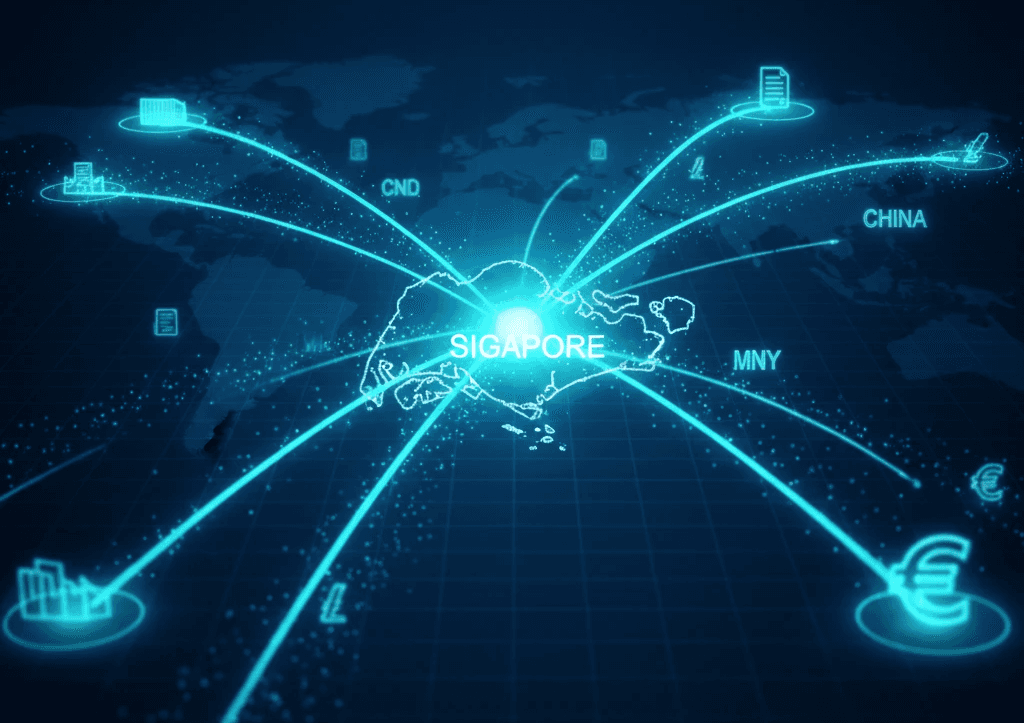
Pay Overseas Staff and Contractors from Singapore


Cross-Border Payroll · Singapore


More Singapore businesses are choosing to pay overseas staff and contractors directly in local currency — and the reasons go well beyond convenience. Singapore is one of Asia’s most globally connected business hubs, and most companies here reach far beyond the island’s borders when it comes to talent. Developers in Vietnam, account managers in Malaysia, factory supervisors in China, freelance designers in the Philippines: the regional workforce that supports Singapore businesses is enormous. But paying them in their own currency, reliably and cost-effectively, remains harder than it should be.

This guide covers everything Singapore companies need to pay overseas staff and contractors from Singapore — the mechanics, the true costs, the compliance context, and which payment method makes sense for your situation.
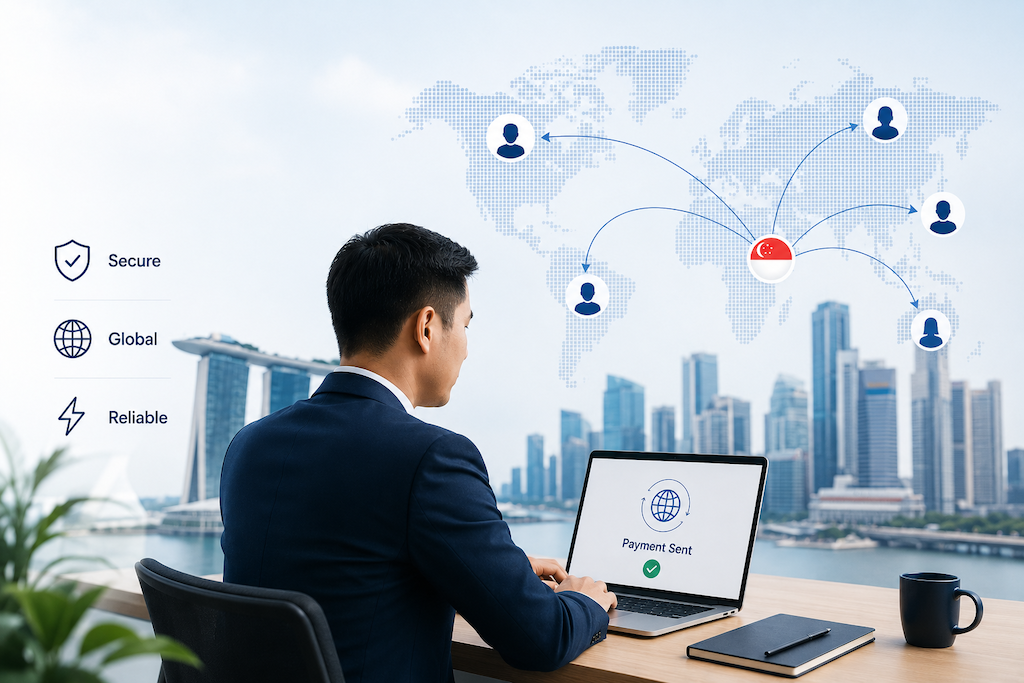
pay overseas staff and contractors

Why Paying in the Recipient’s Local Currency Matters

Many Singapore companies default to paying overseas staff in SGD and leaving the currency conversion to the recipient. On the surface this looks simpler — you know exactly what you’re spending, and your accounting is clean. In practice, it places the FX risk and conversion cost on the employee or contractor, which creates several problems.

A freelance developer in Vietnam who invoices SGD 2,000 every month has no way of knowing whether they’ll receive VND 34 million or VND 36 million when the funds clear. That 5–6% swing is the difference between a profitable month and a tight one. Over a year, the cumulative FX drag can amount to more than a week’s pay — an invisible cost your contractor carries but your competitors may absorb for them.

Paying in local currency signals that you understand your staff’s reality. It also makes your fee structure more competitive when hiring across borders, where candidates increasingly expect transparent, local-currency compensation.

Key principle: When you pay in your recipient’s local currency through a licenced payment institution, the exchange rate and any fees are locked and confirmed before the transfer is sent. The recipient knows exactly what arrives. There are no surprises on either side.

Compliance Context for Singapore Businesses

Before covering the mechanics, it is worth understanding the regulatory and contractual context in which these payments sit. You can verify any MAS-licensed payment institution at the MAS Financial Institution Directory.

Employment Act applicability

Singapore’s Employment Act covers employees who perform work in Singapore. Overseas-based staff — including those employed directly by a Singapore entity but physically working abroad — are governed primarily by the employment laws of their home country, not Singapore’s. Your contracts with overseas employees should reflect this, and you should take local legal advice in each country where you have people on payroll.

Independent contractors vs. employees

Many Singapore companies engage overseas talent as independent contractors rather than employees. This simplifies compliance considerably: the contractor is responsible for their own tax obligations in their home country, and there is no employment relationship that triggers local labour law. However, misclassification risk is real — if someone works exclusively for you, is supervised by you, and uses your tools, some jurisdictions will treat that as employment regardless of how the contract is labelled.

Transfer regulations in destination countries

Most ASEAN and Northeast Asian countries permit inbound transfers from overseas employers without restriction for employment or contractor payments. China is a notable exception: inbound transfers for service fees and salaries must flow through compliant channels, and the transfer purpose code must correctly describe the payment. A licenced payment institution with China expertise — specifically one operating under the People’s Bank of China PSN11 framework — handles this correctly by default.

Note on China payroll: Paying a China-based employee directly to a personal CNY bank account via standard SWIFT can trigger compliance issues at the receiving bank. Transfers labelled as “salary” or “service fee” to Chinese accounts require proper documentation and purpose codes. Use a payment provider that has established PSN11-compliant channels for China.

Which Currencies Are Most Commonly Needed

Singapore companies most frequently need to pay overseas staff and contractors in the following currencies:

CNYChina
MYRMalaysia
IDRIndonesia
VNDVietnam
PHPPhilippines
THBThailand
INRIndia
HKDHong Kong
USDUSD-billed
GBPUK

The right payment method varies somewhat by corridor. CNY payments require the most care due to China’s capital controls. MYR, IDR, VND, PHP, and THB are all accessible through licenced non-bank providers and typically settle faster than bank TT. USD payments — common when a contractor invoices in dollars regardless of their home country — are the most straightforward.

Your Options: A Practical Comparison

Singapore businesses generally have four routes for paying overseas staff and contractors in local currency. Here is how they compare on the factors that matter most.

Method FX transparency Total cost Speed Best for
Bank TT Rate disclosed at time of booking only; margin not shown S$15–35 outgoing fee + correspondent charges + 1.5–2.5% FX spread 2–4 business days Occasional, large one-off payments where speed is not critical
Global payroll platform Rates embedded in monthly subscription; visible at checkout US$49–599/month per contractor depending on plan; FX margin varies 1–2 business days Teams of 5+ contractors needing full HR and compliance management
Consumer remittance app Rate and fee shown upfront Low per-transfer fee; volume discounts limited; not designed for B2B Minutes to 1 business day Very small businesses with 1–2 individual payments per month
MAS-licensed payment institution (e.g. Wealthgate) Rate, fee and exact recipient amount confirmed before every transfer Competitive FX rates; all fees disclosed; no hidden correspondent deductions Within 24 hours for most ASEAN corridors Singapore businesses making regular multi-currency staff or contractor payments at volume

The Hidden Cost Problem With Bank Telegraphic Transfers

Most Singapore businesses default to bank TT because it is familiar and sits within the same banking relationship they use for everything else. But the true cost of a bank TT for overseas staff payments is typically higher than it appears at the time of booking.

Three layers of cost compound in a standard SWIFT transfer:

1. The outgoing TT fee. traditional banks each charge a flat outgoing TT fee, typically SGD 15–35 per transaction. For small monthly contractor payments of SGD 500–2,000, this fee alone represents 1–7% of the transfer value.

2. The FX spread. The exchange rate your bank applies is not the interbank rate. Banks typically build in a margin of 1.5–2.5 percentage points above the mid-market rate. On a SGD 5,000 payment, that is SGD 75–125 in FX cost that never appears as a line item on your statement.

3. Correspondent bank charges. SWIFT transfers often pass through one or two intermediary banks before reaching the recipient. Each may deduct a service fee — typically USD 10–25 — from the transfer amount. Your contractor receives less than you sent, and neither of you knew in advance exactly how much less.

Example: You send SGD 3,000 to a Vietnam-based developer. After the TT fee (SGD 20), FX spread (approximately SGD 60), and one correspondent bank deduction (USD 15, equivalent to approximately SGD 20), your developer receives the equivalent of roughly SGD 2,900 — not SGD 3,000. That shortfall comes as a surprise to both parties.

How a MAS-Licensed Payment Institution Handles It Differently

A MAS Major Payment Institution operating cross-border money transfer services under the Payment Services Act is regulated to handle exactly this use case. Wealthgate holds MPI licence PS20200436, which covers outbound transfers to 30+ currencies from Singapore.

The key differences from bank TT are:

1

Rate and cost locked before you confirm

Before any money moves, you see the exchange rate, the transfer fee, and the exact amount your staff member or contractor will receive in their local currency. You confirm only when you are satisfied with all three numbers.

2

No correspondent bank deductions

Unlike SWIFT transfers that route through intermediary banks, transfers made via a licensed payment institution typically settle directly to the recipient’s account in the destination country via local payment rails. The amount quoted is the amount received.

3

Faster settlement

Most ASEAN corridors — Malaysia, Indonesia, Vietnam, Thailand, Philippines — settle within one business day, often same-day. China typically settles within 24 hours on PSN11-compliant channels.

4

Dedicated support, not a call centre

Wealthgate provides account-level support. When you have a payment that needs to be tracked, amended, or escalated, you speak to the same team that processed it — not a rotating queue.

5

Audit-ready records for every transfer

Each transfer generates a full record showing the sending amount, exchange rate, fees, recipient amount, and settlement confirmation. This is the documentation your finance team needs for expense reconciliation and, where applicable, IRAS reporting.

How to Pay Overseas Staff and Contractors from Singapore: A Practical Setup

If your business is ready to move away from bank TT and establish a proper process, here is a straightforward path to follow. Most Singapore companies that pay overseas staff and contractors from Singapore find that getting the first transfer right is the hardest part — after that, it becomes routine.

Step 1: Collect the right recipient details

For most ASEAN corridors you need the recipient’s full legal name, bank name, account number, and branch code (or equivalent routing identifier). For China, you additionally need the recipient’s national ID number and the bank’s CNAPS code. Collecting this during onboarding — not at payment time — removes delays later.

Step 2: Define your payment currency upfront in the contract

Specify in the service agreement or employment contract whether payment will be made in SGD or local currency, and which party bears any FX fluctuation. Paying in local currency through a transparent provider means you control the rate at the time of each transfer — this should be documented.

Step 3: Establish a regular payment cadence

Batch payments made on a regular schedule (e.g. the last business day of each month) are more cost-efficient and predictable than ad-hoc transfers. Your payment provider can help you set up a process that handles multiple recipients in different currencies in a single workflow.

Step 4: Keep your supporting documentation

For each transfer, retain the invoice from the contractor, the transfer confirmation showing exchange rate and recipient amount, and your payment instructions. This satisfies both your own accounts and any future IRAS queries about business expenses paid overseas.

Frequently Asked Questions

Can a Singapore company pay overseas contractors without a local entity in the destination country?

Yes. Paying an overseas contractor as a service provider does not in itself require you to establish a legal entity in their country. You are paying for services rendered, which is a cross-border commercial transaction. The contractor handles their own tax obligations locally. However, if the contractor is structured and supervised as an employee, some countries may treat the relationship as creating a taxable permanent establishment — seek local legal advice if you have any doubt.

Is there a minimum transfer amount for cross-border staff payments?

This depends on your payment provider. Bank TT minimums are typically SGD 500–1,000 before the fixed fee becomes cost-prohibitive as a percentage. Licensed payment institutions like Wealthgate do not impose minimums that make small contractor payments uneconomical — the fee structure is designed to be proportionate at various payment sizes.

What exchange rate should I use for accounting purposes when paying in foreign currency?

IRAS accepts the exchange rate at the date of payment as the basis for converting foreign-currency expenses to SGD for tax purposes. Your payment provider should issue a transfer confirmation showing the exact rate applied, which you can use directly in your accounts. Keep these confirmations alongside your contractor invoices.

How do I handle withholding tax for overseas contractors?

Singapore imposes withholding tax on certain payments to non-resident individuals for services rendered in Singapore. If your overseas contractor is working entirely from their home country — never physically present in Singapore — withholding tax generally does not apply to those payments. If they visit Singapore to perform services, different rules apply. Consult your tax adviser for the specifics, or refer to the IRAS withholding tax guidance for an overview of Singapore’s rules.

Can I pay multiple overseas staff in different currencies in a single batch?

Yes. A licensed payment institution designed for business use handles multi-currency batch payments as a standard feature. You submit your payment list — each recipient with their currency and amount — confirm the rates and fees for the full batch, and settle in one step. This is considerably more efficient than initiating individual bank TTs for each recipient.

Ready to pay your overseas staff and contractors more efficiently?

Wealthgate is a MAS-licensed Major Payment Institution. We handle cross-border staff and contractor payments to 30+ currencies from Singapore — with the rate, all fees, and the exact amount your recipient receives confirmed before every transfer.
How to Pay Chinese Suppliers from Singapore -2026 Complete Guide

How to Pay Chinese Suppliers from Singapore - 2026 Complete Guide

If your business sources goods from China, paying Chinese suppliers from Singapore is something you will do repeatedly — and getting it right every time matters. A failed payment can delay your shipment, damage your supplier relationship, and create compliance headaches on both sides of the transaction.
This guide of How to Pay Chinese Suppliers from Singapore walks you through the entire process: what information you need before you can pay, which payment method suits your situation, how to avoid the most common rejection reasons, what to do when something goes wrong, and how to keep proper records. Whether you are making your first payment to a Chinese supplier or looking to streamline an existing process, this guide covers it all.

Pay Chinese Suppliers from Singapore

Step 1 — What You Need to Prepare Before You Can Pay Chinese Suppliers from Singapore

The single most common cause of failed China payments is incorrect or incomplete beneficiary information. Before you initiate any payment, collect the following from your supplier in writing — ideally on their company letterhead or via their official email:

Required information to pay Chinese suppliers from Singapore

Required business documents for first-time customers (KYB)

As a MAS-licensed payment institution, Wealthgate is required to verify the identity of all business customers before processing cross-border payments. This is a one-time process for new customers and is required under Singapore's Payment Services Act and MAS AML/CFT guidelines.

For Singapore-registered companies, you will need to provide:

For Singapore subsidiaries of foreign companies, additional documents relating to the parent company structure and UBO may be required.

How long does KYB take? For straightforward Singapore-registered companies with complete documents, our KYB process is typically completed within 1 business day.Preparing your ACRA Bizfile and UBO information in advance will help avoid delays when you are ready to make your payment to Chinese suppliers.

Why every detail matters: Chinese banks are strict about name matching. If the beneficiary name on your payment instruction does not match the account name at the Chinese bank exactly — including spacing, punctuation, or abbreviation — the payment will be rejected. Always ask your supplier to send you a copy of their bank account details directly from their bank, rather than typing them from memory.

First-time supplier tip: Before sending a large payment to a new supplier, consider sending a small test amount — the equivalent of SGD 50 to 100 — to verify the account details are correct. This is a standard practice among experienced importers.


Step 2 — Understand What Currency to Pay In

This is where many Singapore businesses make an unnecessary and costly mistake. You have a choice of paying your Chinese supplier in USD or CNY, and the choice matters.

Paying in USD

Most Singapore banks and some payment providers default to sending USD to China. However, for payments to mainland Chinese suppliers, USD payments must be converted to CNY upon arrival in China at the Chinese bank's internal rate — a rate your supplier has no control over. You end up paying FX costs twice: SGD to USD on your end, and USD to CNY on your supplier's end.

Paying in CNY

When you pay directly in CNY, your supplier receives exactly the amount stated on the invoice. There is only one FX conversion — from SGD to CNY — and it happens on your end, where you can compare rates and choose the best option. CNY payments also tend to have lower rejection rates at Chinese banks.

CNH vs CNY — what is the difference?

CNY is the official onshore Chinese yuan used within mainland China. CNH is the offshore Chinese yuan traded in markets outside China, including Singapore and Hong Kong. When you send a CNY payment to a mainland Chinese supplier, your provider prices the conversion using the CNH rate. The two rates are usually close but not identical. For practical purposes: ask your provider to send CNY to your supplier's CNY bank account.

Recommendation: Pay in CNY wherever possible. Confirm with your supplier that their bank account is a CNY account before sending.


Step 3 — Choose the Right Method to Pay Chinese Suppliers from Singapore

There is no single payment method that is right for every situation when you pay Chinese suppliers from Singapore, Here is how to decide.

Telegraphic Transfer (TT) through your Singapore bank

The most traditional method. You instruct your bank to send funds via SWIFT to your supplier's Chinese bank account. This works and is familiar, but it comes with higher fees, less transparent FX pricing, slower settlement (typically several business days), and limited support when something goes wrong. Banks also provide little guidance on China-specific compliance requirements.

Best suited for: occasional, straightforward payments where speed and cost are less critical.

MAS-licensed cross-border payment providers

Singapore-based payment companies licensed by MAS as Major Payment Institutions — including Wealthgate — offer an alternative specifically designed for cross-border business payments. These providers typically offer more competitive FX rates, lower fees, faster settlement, and dedicated compliance support for China-specific requirements such as SAFE purpose codes and payment documentation.

Best suited for: SMEs making regular supplier payments to China, businesses that have experienced payment rejections, and companies that want transparent pricing and human support.

Letters of Credit (LC)

A bank-issued guarantee that payment will be made once your supplier presents the agreed shipping documents. Protects both buyer and seller, but adds cost and administrative complexity.

Best suited for: large first-time orders with a new supplier, or high-value transactions where payment protection justifies the additional cost.

Alipay and WeChat Pay

Some small suppliers accept payment via Alipay or WeChat Pay. Cross-border business payments via these platforms are subject to strict limits — Alipay caps inbound cross-border business payments at RMB 500,000 per year with a maximum of 5 transactions per month — and do not provide the documentation trail needed for proper trade payment compliance when you pay Chinese suppliers from Singapore.

Best suited for: very small, occasional payments only. Not appropriate for regular supplier relationships.


Step 4 — Understand SAFE Codes and Payment Purpose Documentation

This is the part of China payments that most Singapore SMEs are not aware of — and it is the reason many payments get held or rejected at the Chinese bank.

China's State Administration of Foreign Exchange (SAFE) requires that every inbound cross-border payment carry a purpose code identifying the nature of the transaction. The purpose code must match the supporting documentation you provide.

What documentation you typically need to pay Chinese suppliers from Singapore

Practical steps

At Wealthgate, we guide our customers through the documentation requirements to pay Chinese suppliers from Singapore. If you are unsure what is needed, speak with our team before initiating the payment.


Step 5 — Initiate the Payment Correctly

Once you have your supplier's banking details, confirmed the payment currency, chosen your payment method, and prepared your documentation, you are ready to send.

Information you will need to provide

Double-check before confirming

Once you confirm the payment, you will receive a transaction reference number. Keep this safe — you will need it if you need to trace the payment or raise a query.


Step 6 — Track Your Payment and Know the Expected Timeline

Typical settlement times to pay Chinese suppliers from Singapore

Via a MAS-licensed payment provider (CNY rails): Often within 24 hours, sometimes same day for payments initiated early in the business day.

Via bank TT via SWIFT: Typically 3 to 5 business days, longer if additional compliance checks are triggered.

How to track your payment

Ask your payment provider or bank for a SWIFT MT103 confirmation — the formal document confirming the payment has been sent. Your supplier can use the reference number to trace the payment at their end.

If your payment has not arrived within the expected timeframe, contact your payment provider immediately with your transaction reference number. Do not wait — the sooner you raise a query, the sooner it can be investigated.


Step 7 — What to Do When a Payment Is Rejected or Delayed

Payment rejections happen even to experienced businesses. Knowing what to do when it happens saves time and reduces stress.

Most common rejection reasons and how to handle them

Incorrect beneficiary name — Contact your supplier to get the exact account name as registered with their bank. Resubmit with the corrected name.

Wrong currency — Confirm whether the account is CNY or USD. Resubmit in the correct currency.

Missing or incorrect purpose code — Work with your payment provider to identify the correct SAFE purpose code. Resubmit with the correct code and supporting documentation.

Payment held for additional documentation — The receiving Chinese bank may request additional documents before releasing funds. Your supplier will usually be notified by their bank. Ask your supplier what is needed and provide it promptly.

Amount exceeds SAFE threshold — For very large payments, your supplier may need to complete additional SAFE filing on their end. Ask your supplier to check with their bank and follow their guidance.

Important: When a payment is rejected, the funds are typically returned to the originating account within 3 to 10 business days, depending on the banks involved. Keep your payment provider informed throughout the process.


Step 8 — Keep Proper Payment Records

This is often overlooked but is important for both compliance and accounting purposes. For every China supplier payment, keep the following on file:

MAS-licensed payment providers are required to maintain transaction records, but you should maintain your own records independently. A simple spreadsheet tracking payment date, supplier name, invoice number, payment amount, currency, method, and confirmation reference is sufficient for most SMEs.


Frequently Asked Questions

Can I pay a Chinese supplier through PayPal?

PayPal's cross-border business payment functionality in China is limited, and many Chinese suppliers do not accept it. It is not a reliable or compliant method to pay Chinese suppliers from Singapore.

What if my supplier only has a personal bank account?

This is not necessarily a problem. Many legitimate Chinese suppliers — particularly sole proprietors, small manufacturers, and individual traders — operate through personal bank accounts. Paying to a personal account is permitted and common in cross-border trade.

What matters is that the payment is properly documented. You should have a clear invoice or agreement from your supplier, a legitimate business purpose for the payment, and a record of who you are paying and why. Your payment provider may ask for additional information to satisfy AML requirements when the beneficiary is an individual rather than a registered company — this is standard practice and not a barrier to pay Chinese suppliers from Singapore.

If you are unsure whether your supplier arrangement requires
any additional documentation, speak with our team before
initiating the payment.

Can I pay in SGD directly?

Very few Chinese banks accept SGD. Your payment will be converted to CNY or USD before reaching your supplier. It is better to choose the conversion currency deliberately — CNY is recommended — rather than leaving it to the banks.

Is there a maximum amount I can send per transaction?

MAS-licensed payment providers and banks can handle large-value transactions, but payments above certain thresholds may require additional documentation and compliance review. Contact your payment provider in advance for large or unusual payments.

How do I know if a payment provider is legitimate?

Verify that they hold a valid MAS Major Payment Institution (MPI) licence covering Cross-Border Money Transfer Services. You can check any Singapore payment company's licence on the MAS website at mas.gov.sg. Wealthgate holds MPI licence PS20200436.

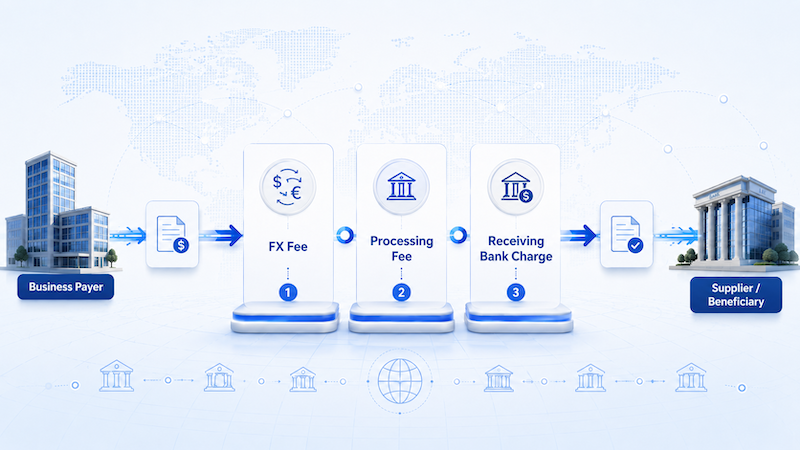
True cost of Cross Board Payments

Transparency & Trust

When a business or individual sends money internationally, the fee shown at checkout is rarely the whole story. Understanding how cross-border payment costs are actually structured — and where value quietly disappears along the way — is the first step toward making better financial decisions.

The Visible Fee Is Only Part of the Picture

Most cross-border payment providers display a single transfer fee. It looks clear. It looks fixed. And for many customers, it is the only number they examine before confirming a transaction.

But the economics of a cross-border payment are more layered than a single line item. The fee you see covers the provider's visible charge. What it does not always show is where the exchange rate was set, how far that rate sits from the real mid-market rate, whether intermediary banks take a cut along the routing chain, or what the recipient actually receives at the other end.

The most meaningful question is not "what is the transfer fee?" It is: how much does the recipient actually receive, and what was the true all-in cost of moving that money?

Where Cost Hides in a Cross-Border Payment

There are typically three places where value erodes in a cross-border transfer:

Layer 1

The FX Margin

The gap between the rate offered to the customer and the real interbank rate. Often the largest hidden cost — and the least visible.

Layer 2

The Transfer Fee

The visible upfront charge. Usually the number most prominently displayed — and often not the biggest cost in the transaction.

Layer 3

Correspondent & Receiving Fees

Charges applied by intermediary or receiving banks along the payment route. Often unknown to the sender at the point of transfer.

For small personal transfers, the FX margin might cost more than the declared fee. For larger business payments, even a modest spread compounds into a meaningful number. For high-volume or recurring payments — supplier settlements, operational payrolls, recurring collections — the cumulative effect is significant.

Why This Problem Persists

The opacity in cross-border payment pricing is not accidental. It is structural. Pricing complexity makes direct comparison difficult. FX margins are not regulated the way explicit fees are. Correspondent banking networks involve multiple parties, each with their own cost structure. And many customers — understandably — focus on the declared fee and assume it represents the full cost.

Traditional providers have had little competitive pressure to simplify this. If comparison is difficult, pricing discipline is also difficult to enforce from the customer's side.

An honest pricing model does not require customers to do the arithmetic themselves. It shows total cost clearly, converts at a rate that can be verified, and does not recover margin in ways that are invisible at the point of decision.

What Transparent Pricing Actually Looks Like

Pricing transparency is not just a marketing claim. It is a design decision. A provider serious about transparency will typically:

None of this requires subsidising transfers or offering loss-leader pricing. It requires a commitment to legibility — that customers understand what they are paying and why, before they confirm.

For Businesses, the Stakes Are Higher

one global account to pay and collect payment

Individual senders lose value to hidden margins on each transfer. For businesses — particularly those making regular international payments, settling with overseas suppliers, or managing multi-currency cash flows — the aggregate effect is larger, and the operational problem is compounded.

A business paying multiple suppliers in different currencies, each through a different bank or provider, faces fragmented pricing, inconsistent FX treatment, variable settlement times, and no clean picture of its true payment costs. Reconciliation becomes manual. Budgeting becomes imprecise. Treasury decisions are made on incomplete information.

Better pricing transparency is not just a fairness issue for businesses — it is an operational one. When costs are clear and predictable, financial planning becomes more reliable.

Questions Worth Asking Any Cross-Border Payment Provider

Before committing to a provider or corridor, these are the questions that matter most:

  1. What exchange rate will be applied to my transfer, and how does it compare to the current mid-market rate?
  2. Is there a separate FX margin, or is it built into the transfer fee?
  3. What will the recipient actually receive, stated in the destination currency, before I confirm the transaction?
  4. Are there any fees applied by intermediary or receiving banks that may reduce the amount delivered?
  5. How does your pricing change for higher-value or higher-volume transfers?
  6. Is the rate I see today the rate I will receive consistently, or does it vary based on conditions I cannot predict?

How We Think About This at WealthGate International Trading

We are a licensed payment service provider in Singapore, regulated by the Monetary Authority of Singapore, focused on cross-border money movement for individuals and businesses. Our goal is to operate in a way that is commercially straightforward — where the cost of a transfer is stated clearly, the rate used is verifiable, and customers are not left calculating what they actually paid after the fact.

We do not claim to be the cheapest option in every corridor or for every customer. We do aim to be the option where the cost is clear enough that customers can make that judgement for themselves.

International Payroll Management: Pay Your Remote Teams and Overseas Employees Seamlessly

they shouldn't wait for international transfers either. With Wealthgate, most transfers are completed within 24 hours, ensuring your employees have access to their earnings when they need them.

Bulk Payment Capabilities

Stop processing payments one by one. Upload your entire payroll roster, and distribute salaries to dozens or hundreds of employees across multiple countries simultaneously. What used to take hours now takes minutes.

Multi-Currency Support

Pay employees in their local currency, eliminating the complexity and cost of currency conversion on their end. Support for 100+ countries and major currencies worldwide means you can hire talent anywhere.

Detailed Payment Tracking

Monitor every payment in real-time. Know exactly when funds are sent, converted, and received. Generate comprehensive reports for accounting and compliance purposes with just a few clicks.

Dedicated Support

When payroll issues arise, you need answers immediately. Our dedicated account managers understand the urgency of payroll and provide priority support to ensure your team gets paid on time, every time.

Real-World Impact

Consider a mid-sized tech company with 30 remote employees spread across Southeast Asia, Latin America, and Eastern Europe. Before switching to Wealthgate:

After implementing Wealthgate's solution:

Getting Started with International Payroll

Setting up international payroll with Wealthgate is straightforward:

  1. Create Your Business Account: Verify your business details and complete our streamlined onboarding process.
  2. Add Employee Payment Details: Securely store employee banking information for all international team members.
  3. Schedule or Process Payments: Set up recurring payroll schedules or process one-time payments as needed.
  4. Track and Report: Monitor all transactions through your dashboard and export reports for accounting purposes.

The Future of Global Teams

Remote work isn't a temporary trend—it's the future of how businesses operate. Companies that embrace international talent while solving the practical challenges of global operations will have a significant competitive advantage.

International payroll doesn't have to be complicated. With the right partner, paying your global team becomes as simple as paying local employees, freeing you to focus on what matters: growing your business and supporting your team.

Ready to Simplify Your International Payroll?

Whether you're making your first international hire or managing a distributed team of hundreds, Wealthgate provides the infrastructure you need to pay your global workforce seamlessly.

Schedule a demo today to see how Wealthgate can transform your international payroll operations—reducing costs, saving time, and improving the payment experience for your entire team.

Supplier & Vendor Payments: Streamline Payments to International Suppliers and Manufacturers

In today's interconnected economy, your supply chain likely spans multiple continents. Whether you're sourcing raw materials from Asia, working with manufacturers in Eastern Europe, or partnering with distributors across Latin America, one thing remains constant: the need to pay suppliers efficiently and reliably.

Yet for many businesses, international supplier payments remain one of the most frustrating aspects of global commerce.

The Hidden Cost of Traditional Supplier Payments

Every delayed payment, every unexpected fee, and every exchange rate surprise doesn't just affect your bottom line—it impacts your supplier relationships and your ability to negotiate favorable terms.

Consider the typical challenges businesses face when paying international suppliers:

Excessive Banking Fees: Traditional banks can charge $25-$50 per international wire transfer, plus intermediary bank fees you won't know about until after the payment is processed. When you're making dozens of supplier payments monthly, these fees compound rapidly.

Poor Exchange Rates: Banks often markup currency exchange rates by 3-5% above the mid-market rate. On a $50,000 payment, that's $1,500-$2,500 lost to unfavorable exchange rates—money that could have been invested back into your business.

Slow Payment Processing: Standard international wire transfers can take 3-5 business days, sometimes longer. When your supplier needs payment to release a shipment or start production, delays cascade through your entire operation.

Payment Uncertainty: With traditional banking, you send a payment and hope it arrives. Tracking is minimal, and if something goes wrong, resolution can take weeks. This uncertainty makes production planning and inventory management unnecessarily stressful.

Administrative Burden: Processing each payment individually means gathering invoice details, initiating transfers, tracking confirmations, and reconciling accounts. For businesses with multiple suppliers, this can consume hours of valuable time weekly.

Relationship Strain: Late payments damage supplier relationships. When suppliers can't rely on timely payment, they may demand less favorable terms, require deposits, or prioritize other customers' orders over yours.

Why Supplier Payment Efficiency Matters

Your suppliers are partners in your success. The efficiency of your payment processes directly impacts:

Negotiating Power: Suppliers who receive prompt, reliable payments are more likely to offer better pricing, extended payment terms, and priority during high-demand periods.

Supply Chain Reliability: When you pay on time consistently, suppliers prioritize your orders. This means faster turnaround times, better inventory management, and fewer stockouts.

Cash Flow Management: Knowing exactly when and how much you'll pay allows for better financial planning. Transparent fees and exchange rates eliminate budget surprises.

Operational Efficiency: Time your team spends processing payments manually is time not spent on strategic sourcing, supplier development, or cost optimization.

Competitive Advantage: In competitive markets, the ability to pay quickly and reliably can be the difference between securing critical supplies and losing out to competitors.

The Complexity of International Trade Payments

International supplier payments come with unique challenges that domestic payments don't face:

Currency Management: When dealing with suppliers in different countries, you're constantly converting currencies. Market fluctuations can significantly impact your costs, and timing your payments for favorable rates requires expertise most businesses don't have in-house.

Documentation Requirements: International payments often require detailed documentation—commercial invoices, purchase orders, customs declarations. Managing this paperwork across multiple suppliers and jurisdictions is complex and error-prone.

Compliance Obligations: Cross-border payments must comply with international trade regulations, anti-money laundering requirements, and sanctions screening. Failure to comply can result in penalties, payment delays, or frozen accounts.

Time Zone Coordination: When your supplier operates 12 hours ahead or behind, coordinating payment timing and resolving issues becomes challenging. By the time you notice a problem, their business day may be over.

How Wealthgate Transforms Supplier Payments

Wealthgate's business remittance platform is designed specifically for companies managing international supplier relationships. Here's how we streamline your payment operations:

Transparent, Competitive Pricing

See the exact cost of every payment before you send it. Our transparent fee structure means no surprise charges, no hidden intermediary fees, and no markup mysteries. You'll know precisely what you're paying and what your supplier will receive.

Real-Time Exchange Rates

Access competitive, real-time exchange rates that reflect actual market conditions. Our platform shows you the mid-market rate and our small, transparent markup—giving you confidence that you're getting fair value on every currency conversion.

Rapid Payment Processing

Most payments are completed within 24 hours, with many arriving the same day. When your supplier needs payment to release a shipment or meet a production deadline, speed matters. Wealthgate ensures your payments arrive when needed.

Bulk Payment Capabilities

Pay multiple suppliers simultaneously with our bulk payment feature. Upload a spreadsheet with all your payment details, and process dozens or hundreds of payments in minutes rather than hours. This is particularly valuable during month-end payment runs or when managing seasonal inventory purchases.

Comprehensive Payment Tracking

Know exactly where every payment is at all times. Track payments from initiation through delivery, receive notifications at key milestones, and provide suppliers with payment confirmation instantly. This visibility eliminates the anxiety of wondering whether payments arrived.

Multi-Currency Account Management

Hold balances in multiple currencies to take advantage of favorable exchange rates or to facilitate regular payments in specific currencies. This gives you greater control over currency timing and can result in significant savings over time.

Detailed Reporting and Reconciliation

Generate comprehensive reports for accounting, reconciliation, and audit purposes. Export payment data in formats compatible with your accounting software, making month-end closes faster and more accurate.

Dedicated Support for Trade Payments

Our team understands the urgency of supplier payments in the context of global supply chains. When issues arise, you'll have access to knowledgeable support staff who can resolve problems quickly, minimizing disruption to your operations.

Real-World Supply Chain Impact

Consider a manufacturing business that sources components from suppliers in China, Taiwan, and Vietnam, with final assembly in Thailand. Before partnering with Wealthgate:

After implementing Wealthgate's supplier payment solution:

Best Practices for International Supplier Payments

To maximize the efficiency of your supplier payment operations:

Standardize Payment Terms: Work with suppliers to establish consistent payment schedules. Regular, predictable payments strengthen relationships and improve your negotiating position.

Plan Currency Conversions: Monitor exchange rate trends and consider holding balances in frequently-used currencies. Even small improvements in rates can generate significant savings at scale.

Maintain Clear Documentation: Keep detailed records of all international payments, including invoices, purchase orders, and payment confirmations. This documentation is essential for audits, disputes, and tax compliance.

Communicate Proactively: Inform suppliers of payment schedules and provide tracking information. Transparency builds trust and prevents unnecessary follow-up inquiries.

Review Payment Data Regularly: Analyze your payment patterns to identify opportunities for consolidation, negotiation, or process improvement.

The Strategic Value of Efficient Supplier Payments

Efficient supplier payments aren't just about reducing costs—they're about building a more resilient, responsive supply chain. When you can pay suppliers quickly and reliably:

Getting Started with Streamlined Supplier Payments

Transitioning to Wealthgate's supplier payment platform is straightforward:

  1. Account Setup: Complete our business verification process and configure your account for international payments.
  2. Supplier Onboarding: Add your suppliers' banking details securely to the platform. We support payment to businesses in 100+ countries.
  3. Payment Processing: Initiate individual payments or use bulk upload for multiple suppliers. Schedule recurring payments for regular suppliers.
  4. Tracking and Reporting: Monitor all payments in real-time and generate reports for reconciliation and accounting.

The Future of Global Sourcing

As supply chains become increasingly global and complex, the businesses that thrive will be those that can manage international relationships efficiently. Supplier payments are a critical touchpoint in these relationships—they represent trust, reliability, and partnership.

Don't let outdated payment processes undermine your supply chain efficiency. With the right remittance partner, paying international suppliers becomes as simple as paying domestic vendors, giving you more time to focus on sourcing strategy, supplier development, and business growth.

Transform Your Supplier Payment Operations Today

Whether you're making a handful of international payments monthly or managing complex, multi-currency supply chains, Wealthgate provides the infrastructure you need to pay suppliers efficiently and cost-effectively.

Schedule a consultation to discover how Wealthgate can reduce your payment costs, accelerate your cash conversion cycle, and strengthen your supplier relationships—giving you a competitive edge in global markets.

Freelancer & Contractor Disbursements: Manage Payments to Your Global Freelance Workforce Efficiently

The freelance economy has revolutionized how businesses access talent. Today, a startup in Singapore can work with a designer in Argentina, a developer in Ukraine, and a content writer in Kenya—all without traditional employment contracts or geographic constraints.

But while hiring global freelancers has become easier, paying them efficiently remains a significant challenge for many businesses.

The Freelance Payment Problem

Managing payments to a global network of freelancers and contractors is fundamentally different from traditional payroll. Each freelancer may prefer different payment methods, work in different currencies, and have unique payment schedules based on project milestones.

The challenges multiply quickly:

Payment Method Complexity: Some freelancers want bank transfers, others prefer digital wallets or payment platforms. Accommodating multiple payment preferences while maintaining financial controls becomes administratively overwhelming.

High Transaction Costs: Paying freelancers through traditional banks or popular freelance platforms can cost 3-7% per transaction. When you're disbursing thousands of dollars monthly to contractors, these fees represent significant overhead that doesn't add value to your business.

Processing Delays: Freelancers rely on timely payment to manage their own cash flow. When payments take 5-7 business days to arrive, it strains relationships and may cause you to lose talented contractors to competitors who pay faster.

Currency Conversion Issues: Freelancers often receive less than expected due to poor exchange rates and hidden fees. When a freelancer expects $1,000 but receives the equivalent of $920 in their local currency, it creates tension and requires awkward conversations.

Administrative Overhead: Tracking invoices, processing individual payments, managing different payment platforms, and reconciling transactions across multiple systems can consume hours each week—time that could be spent managing projects or growing your business.

Compliance Complexity: Different countries have different requirements for contractor payments, tax documentation, and reporting. Ensuring compliance across multiple jurisdictions is challenging and carries risk if done incorrectly.

Payment Tracking Difficulties: When you're managing 10, 20, or 50+ freelancers, keeping track of who's been paid, when, and for which projects becomes a logistical nightmare without proper systems.

Why Efficient Freelancer Payments Matter

Your freelance and contractor workforce is essential to your operational flexibility. The efficiency of your payment processes directly impacts:

Talent Retention: Top freelancers have options. They'll continue working with clients who pay promptly and reliably, and move away from those who don't. Payment efficiency is a key factor in whether freelancers accept repeat projects.

Reputation in Freelance Communities: Freelancers talk. Word spreads quickly about clients who are difficult to work with, pay late, or whose payment processes cause headaches. Your reputation affects your ability to attract quality talent.

Project Timelines: When freelancers are confident they'll be paid promptly upon milestone completion, they're more motivated to deliver quickly. Payment uncertainty can lead to delayed deliverables as freelancers prioritize clients with reliable payment histories.

Negotiating Leverage: Freelancers who trust your payment processes are often willing to offer better rates, accept rush projects, or provide flexibility during crunch times. This goodwill has real business value.

Administrative Efficiency: Time spent managing freelancer payments manually is time not spent on core business activities. Streamlined payment processes free your team to focus on project management and strategic initiatives.

Cost Control: When payment fees are transparent and predictable, budgeting becomes easier. Surprise fees and poor exchange rates make financial planning difficult and eat into project margins.

The Unique Nature of Freelance Payments

Freelance and contractor payments differ from traditional employment in several important ways:

Variable Payment Schedules: Unlike salaried employees paid on predictable cycles, freelancers may be paid upon project completion, at milestones, or on custom schedules negotiated for each engagement.

Diverse Payment Amounts: Payments range from small amounts for micro-projects to substantial sums for long-term engagements. Your payment system needs to handle this variability efficiently.

Multiple Currencies and Locations: A single business might work with freelancers in 15-20 different countries, each with their own banking systems, currency preferences, and regulatory requirements.

Invoice-Based Payments: Each payment typically corresponds to a specific invoice or project, requiring clear documentation for accounting and tax purposes.

Relationship Management: Freelancers are business partners, not employees. The payment experience reflects your professionalism and affects the long-term viability of these partnerships.

How Wealthgate Streamlines Freelancer Disbursements

Wealthgate's business remittance platform is purpose-built for companies managing distributed freelance workforces. Here's how we transform the contractor payment experience:

Simple, Transparent Pricing

Know exactly what each payment will cost before you send it. No platform fees, no percentage-based charges, no hidden surprises. Our flat-rate structure means paying a freelancer $500 or $5,000 doesn't multiply your fees proportionally—making small contractor payments as cost-effective as large ones.

Competitive Exchange Rates

Your freelancers receive the full value of their work. With transparent, real-time exchange rates and minimal markup, we ensure contractors in local currencies get fair value—protecting both your budget and their earnings.

Fast Payment Processing

Most payments arrive within 24 hours, with many completing the same day. When a freelancer completes a project, they can count on rapid payment—increasing satisfaction and making your business a preferred client.

Batch Payment Capabilities

Pay all your freelancers at once. Upload your payment list, review and approve, then disburse payments to dozens of contractors simultaneously. What used to take hours—logging into multiple platforms, initiating individual transfers—now takes minutes.

Multi-Currency Support

Pay freelancers in their preferred currency, eliminating confusion and ensuring they receive exactly what they expect. Support for 100+ countries means you can work with talent anywhere without payment constraints.

Payment Tracking and Notifications

Track every payment in real-time from initiation to completion. Automated notifications keep freelancers informed about payment status, reducing the need for "Did you send my payment?" follow-ups and giving everyone visibility into the payment process.

Invoice Management Integration

Link payments to specific invoices and projects, maintaining clear documentation for accounting and tax purposes. Generate reports that show exactly what was paid, to whom, and for which projects—making reconciliation straightforward.

Secure Contractor Information Storage

Store freelancer payment details securely in the platform. Once onboarded, contractors can be paid with just a few clicks—no need to re-enter banking information or verify details for each payment.

Dedicated Support

When payment issues arise—and occasionally they do—our support team responds quickly to resolve problems. We understand that freelancers depend on these payments, and we treat every issue with appropriate urgency.

Real-World Freelance Payment Transformation

Consider a digital marketing agency working with 35 freelancers across content writing, graphic design, video production, and social media management. Their freelance network spans 18 countries across four continents.

Before implementing Wealthgate:

After switching to Wealthgate:

Best Practices for Freelance Payment Management

To optimize your freelance payment operations:

Establish Clear Payment Terms Upfront: Before starting any project, clarify payment amount, currency, schedule, and method. Put it in writing. This prevents misunderstandings and sets proper expectations.

Maintain Consistent Payment Schedules: Where possible, establish regular payment dates (e.g., within 3 business days of invoice approval). Consistency builds trust and makes you a preferred client.

Communicate Payment Status: Send notifications when payments are initiated and when they're completed. This proactive communication reduces anxiety and follow-up inquiries.

Keep Detailed Records: Maintain clear documentation linking payments to specific invoices, projects, and deliverables. This is essential for accounting, taxes, and dispute resolution.

Onboard Freelancers Properly: Take time to collect correct payment information upfront. A few extra minutes during onboarding prevents payment failures and delays later.

Review and Optimize Regularly: Periodically analyze your payment data to identify patterns, assess costs, and find opportunities for improvement.

Budget for Total Cost: When planning project budgets, factor in payment fees and currency conversion costs. Understanding true all-in costs prevents margin erosion.

Build Payment Efficiency Into Your Competitive Advantage: Market your streamlined payment processes when recruiting freelancers. "We pay within 24 hours via direct bank transfer" is a powerful differentiator.

The Strategic Value of Efficient Freelancer Payments

Efficient contractor payments aren't just an operational convenience—they're a strategic asset:

Access to Better Talent: Top freelancers choose where to direct their energy. Being known for hassle-free, prompt payments makes you a client of choice, giving you access to the best available talent.

Operational Scalability: As your business grows and your freelance network expands, efficient payment systems scale without proportional increases in administrative overhead.

Financial Predictability: Transparent, consistent payment costs make budgeting easier and protect project margins from unexpected fees.

Relationship Capital: Every smooth payment interaction strengthens your relationship with freelancers, creating goodwill you can draw on when you need quick turnarounds or have urgent projects.

Competitive Positioning: In competitive markets where multiple clients bid for the same talent, your payment reputation can be the deciding factor.

Building a World-Class Freelance Operation

The future of work is flexible, distributed, and increasingly freelance-driven. Companies that excel at managing global freelance workforces will have significant advantages in agility, cost structure, and access to specialized skills.

But building a world-class freelance operation requires more than just finding good contractors—it requires treating them as valued partners, and nothing demonstrates this more clearly than how you handle payments.

Don't let outdated payment processes limit your ability to leverage global freelance talent. With the right remittance partner, paying contractors becomes as simple as approving an invoice—fast, transparent, and hassle-free.

Transform Your Freelance Payment Operations

Whether you work with a handful of occasional contractors or manage a large, ongoing network of freelance talent, Wealthgate provides the payment infrastructure you need to operate efficiently and scale confidently.

Schedule a demo today to see how Wealthgate can reduce your payment costs, save administrative time, and improve your freelancer relationships—giving you access to the best global talent without payment headaches.

Cross-Border Invoice Settlement: Settle International Invoices with Transparent Rates and Fast Processing

Cross-Border Invoice Settlement: Settle International Invoices with Transparent Rates and Fast Processing

International trade creates opportunities for businesses to expand markets, diversify suppliers, and access specialized services globally. But behind every successful international transaction lies a critical challenge: settling invoices across borders efficiently and cost-effectively.

For many businesses, cross-border invoice settlement remains an expensive, slow, and opaque process that creates friction in otherwise smooth trading relationships.

The Invoice Settlement Challenge

When you receive an invoice from an international supplier or send one to an overseas client, the payment journey involves multiple intermediaries, currency conversions, and regulatory checkpoints. Each step introduces potential delays, costs, and complications.

The typical pain points businesses face include:

Hidden Costs and Fee Stacking: An invoice for $10,000 might cost you $10,400 to settle once you account for transfer fees, intermediary bank charges, currency conversion markup, and receiving bank fees. The problem? You often don't know the total cost until after the payment is completed.

Opaque Exchange Rates: Banks and traditional payment providers often use exchange rates marked up 3-5% above the mid-market rate without clearly disclosing this. Over dozens of invoices annually, these hidden markups can cost your business tens of thousands of dollars.

Prolonged Settlement Times: Standard international wire transfers take 3-5 business days, sometimes longer for certain corridors or when intermediary banks are involved. When suppliers need payment to ship goods or clients require receipts for urgent orders, these delays disrupt business operations.

Payment Uncertainty: After initiating a payment, you're often left wondering: Did it arrive? Was the full amount received? Were there deductions along the way? This lack of visibility creates anxiety and generates follow-up work for both parties.

Reconciliation Nightmares: When payments don't match invoices exactly due to fees or exchange rate fluctuations, accounting teams spend hours reconciling discrepancies. Multiply this across dozens or hundreds of invoices, and it becomes a significant productivity drain.

Documentation Complexity: International payments require proper documentation—commercial invoices, purchase orders, payment references. Managing this paperwork across different currencies, languages, and regulatory frameworks is complex and error-prone.

Currency Risk: For businesses with ongoing international relationships, currency fluctuations can significantly impact costs. An invoice denominated in euros or yuan today might cost substantially more or less when you pay it weeks later.

Relationship Strain: Late payments damage business relationships. Suppliers may demand upfront payment, reduce credit terms, or deprioritize your orders. Clients may delay future purchases or seek more reliable partners.

Why Invoice Settlement Efficiency Matters

Efficient cross-border invoice settlement isn't just about moving money—it's about maintaining healthy trading relationships and optimizing working capital:

Cash Flow Management: Knowing exactly when invoices will be settled and how much they'll cost allows for accurate cash flow forecasting. Uncertainty in either timing or cost disrupts financial planning.

Supplier Relationships: Suppliers who receive prompt, full payment become preferred partners. They're more likely to offer favorable terms, priority during high-demand periods, and flexibility when you need it.

Client Satisfaction: For businesses receiving international payments, fast settlement improves cash flow and demonstrates professionalism. Clients appreciate providers who make the payment process smooth and transparent.

Working Capital Optimization: Faster invoice settlement means faster access to funds, reducing the need for expensive working capital financing and improving your overall financial position.

Competitive Advantage: In industries with thin margins, controlling invoice settlement costs can mean the difference between profitable and unprofitable international transactions.

Operational Efficiency: Time spent chasing payments, reconciling discrepancies, and managing payment-related communications is time not spent on revenue-generating activities.

The Complexity of International Invoice Settlement

Cross-border invoice payments involve unique challenges that domestic settlements don't face:

Multiple Currencies: When your business operates in SGD but settles invoices in USD, EUR, GBP, JPY, and AUD, you're constantly managing currency exposure and conversion costs.

Regulatory Compliance: International payments must comply with anti-money laundering regulations, sanctions screening, tax reporting requirements, and trade documentation standards across multiple jurisdictions.

Banking Networks: Traditional correspondent banking networks involve multiple intermediary banks, each potentially taking fees and adding processing time. The more banks involved, the more expensive and slower the payment becomes.

Time Zone Differences: When you're trying to settle an urgent invoice with a supplier 12 hours ahead, timing coordination becomes critical. Payment windows and cut-off times vary by institution and currency.

Payment Traceability: Once a payment enters the international banking system, tracking it can be challenging. You may not know if there's a problem until the supplier contacts you days later.

Invoice Matching: Ensuring payments match invoices exactly—including invoice numbers, amounts, and reference information—becomes more difficult across systems, currencies, and languages.

How Wealthgate Transforms Invoice Settlement

Wealthgate's business remittance platform is designed specifically for companies managing international invoice payments. Here's how we streamline your settlement operations:

Complete Price Transparency

See the total cost of settling any invoice before you commit. Our platform shows the exchange rate, all fees, and the exact amount that will be debited from your account and credited to the recipient. No surprises, no hidden charges, no unexpected deductions.

Competitive, Real-Time Exchange Rates

Access live exchange rates that reflect actual market conditions. We display the mid-market rate alongside our transparent markup, so you know you're getting fair value. For businesses settling multiple invoices monthly, better rates translate directly to bottom-line savings.

Rapid Settlement Processing

Most payments are completed within 24 hours, with many arriving the same day. When you need to settle an invoice to release a shipment, meet a payment deadline, or maintain good supplier relationships, speed matters. Wealthgate ensures your settlements happen promptly.

End-to-End Payment Tracking

Monitor every invoice payment from initiation to completion. See exactly when funds leave your account, when they're converted, and when they arrive with the recipient. Real-time tracking eliminates uncertainty and reduces follow-up inquiries.

Bulk Invoice Settlement

Settle multiple invoices simultaneously. Upload a payment file with all your outstanding invoices, review the total cost, and process everything in one batch. This is particularly valuable during month-end payment runs when you're settling dozens of supplier invoices.

Multi-Currency Account Capabilities

Hold balances in multiple currencies to optimize exchange timing and reduce conversion frequency. If you regularly settle invoices in euros, maintain a EUR balance to pay suppliers directly without constant SGD-EUR conversions.

Comprehensive Payment Documentation

Every payment includes complete documentation: payment confirmation, exchange rate details, fee breakdown, and payment reference information. This documentation integrates seamlessly with your accounting systems, simplifying reconciliation and audit processes.

Invoice Reference Integration

Link payments directly to specific invoices, including invoice numbers, PO references, and custom notes. This ensures both you and your trading partner can easily match payments to invoices, reducing reconciliation work on both sides.

Dedicated Settlement Support

When urgent invoice settlements are critical to your operations, you need responsive support. Our team understands the commercial implications of payment delays and works quickly to resolve any issues that arise.

Payment Scheduling

Schedule invoice payments in advance for optimal exchange rates or to align with cash flow. Set up recurring payments for regular invoices, automating settlement processes and ensuring consistent, timely payments.

Real-World Invoice Settlement Impact

Consider an import/export business settling approximately 80 international supplier invoices monthly, with a total monthly payment volume of $350,000 across multiple currencies (USD, EUR, CNY, GBP).

Before partnering with Wealthgate:

After implementing Wealthgate's invoice settlement solution:

Best Practices for Cross-Border Invoice Settlement

To optimize your international invoice settlement operations:

Establish Clear Payment Terms: Agree on payment timing, currency, and method before entering into transactions. Include these terms explicitly in contracts and purchase orders.

Maintain Payment Schedules: Develop consistent settlement schedules (e.g., weekly or bi-weekly payment runs) so suppliers know when to expect payment. Consistency builds trust and reduces follow-up communications.

Use Detailed Payment References: Include invoice numbers, PO numbers, and relevant project details in payment references. This makes reconciliation easier for both parties and prevents confusion.

Monitor Exchange Rates: For large invoices or regular payments in specific currencies, pay attention to exchange rate trends. Consider holding balances in frequently-used currencies to optimize conversion timing.

Communicate Proactively: Notify suppliers when payments are initiated and provide tracking information. This reduces anxiety and eliminates unnecessary "Where's my payment?" inquiries.

Reconcile Promptly: Match payments to invoices as they settle rather than waiting for month-end. This keeps accounting current and identifies issues quickly while they're still fresh.

Document Everything: Maintain comprehensive records of all international settlements, including invoices, payment confirmations, exchange rates applied, and fees charged. This documentation is critical for audits, tax compliance, and dispute resolution.

Review Settlement Costs Regularly: Analyze your total cost of invoice settlement monthly or quarterly. Small improvements in rates or fees compound significantly over time.

Negotiate Currency Terms: For ongoing relationships with significant invoice volumes, consider negotiating which party bears currency conversion risk. Sometimes settling in the supplier's local currency provides better overall value.

The Strategic Value of Efficient Invoice Settlement

Efficient cross-border invoice settlement delivers benefits beyond cost savings:

Supplier Relationship Strength: Suppliers who receive prompt, reliable payment prioritize your orders, offer better terms, and provide flexibility during challenging periods. This relationship capital has real commercial value.

Working Capital Optimization: Faster settlement processes—both paying invoices and receiving payments—improve cash conversion cycles and reduce working capital requirements.

Risk Management: Transparent, predictable settlement costs eliminate budget surprises and make international trade financially more manageable.

Scalability: As your international business grows, efficient settlement systems scale without proportional increases in administrative overhead or costs.

Professional Reputation: Being known for smooth, reliable payment processes enhances your reputation in international markets, making it easier to establish new trading relationships.

Financial Control: Better visibility into payment costs and timing enables more accurate financial forecasting and tighter cost control.

The Future of International Trade

As global commerce continues to expand, the businesses that thrive will be those that can manage international transactions efficiently. Invoice settlement—the final, critical step in every international transaction—should be seamless, not stressful.

Traditional banking infrastructure wasn't designed for today's fast-paced, globally-connected business environment. Companies need payment partners who understand the commercial realities of international trade and provide the speed, transparency, and reliability that modern business demands.

Don't let outdated invoice settlement processes undermine your international operations. With the right remittance partner, settling cross-border invoices becomes as straightforward as domestic payments—fast, transparent, and cost-effective.

Transform Your Invoice Settlement Operations

Whether you're settling a handful of international invoices monthly or managing complex, high-volume cross-border payment flows, Wealthgate provides the infrastructure you need to optimize costs, improve speed, and maintain strong trading relationships.

Schedule a consultation today to discover how Wealthgate can reduce your invoice settlement costs, accelerate your payment processing, and give you the visibility and control you need to manage international transactions confidently.

Maximize Profits, Minimize Delays: Fast and Transparent Cross-Border Remittance for Singapore SMEs

Stop Losing Money on Global Trade: Fast and Transparent Cross-Border Payments for Singapore SMEs

The global economy relies heavily on the Small-to-Medium Enterprise (SME) sector, which often serves as the lifeblood of communities globally. As businesses expand internationally, sourcing supplies, hiring global talent, and working with vendors across multiple countries, the demand for efficient cross-border payments is surging. However, managing international payments via outdated systems turns into a complex, costly, and time-consuming operation, especially for businesses with limited resources.

Wealthgate understands that your focus should be on growth, not on navigating complex financial processes. As an MAS-licensed remittance provider, Wealthgate is dedicated to serving Singapore SMEs by cutting through the friction associated with international transfers, offering a solution designed for speed, transparency, and simplicity. We ensure your funds reach suppliers quickly and affordably, whether they are in China, Malaysia, Southeast Asia, or anywhere globally.

The Hidden Costs of Global Trade: Critical Pain Points SMEs Face

For Singapore SMEs engaged in international wholesale and trade, paying overseas suppliers remains one of the greatest operational challenges. Traditional correspondent banking methods and many incumbent payment systems often fail to deliver the transparency or efficiency that small businesses require. SMEs are actively seeking effective, cost-competitive cross-border solutions.

Here are the critical payment pain points impeding SME operations:

1. High Bank Charges and Unfavourable FX Rates

Traditional financial institutions, including large banks, often impose complicated and costly fee structures for international money transfer. These costs chip away at profit margins and can offset savings gained from global sourcing.

High Bank Charges

Traditional wire transfers are expensive, involving fixed fees and unpredictable intermediary or correspondent bank charges. The lack of a single solution often forces businesses to use multiple payment tools and processes to handle spending across regions.

Bad FX Rates (Hidden FX Fees):

Beyond stated transfer fees, many institutions apply significant markups on top of the actual interbank exchange rate when converting currency. This opaque pricing makes the cost of foreign exchange a "Wild West" where transparency is lacking for businesses. Research shows that the cost to small businesses from these hidden fees has risen significantly.

2. Slow Transfer Times and Delivery Delays

The historic complexity of global correspondent banking networks, involving numerous manual steps, led to a culture of de-risking that often squeezes out small customers—the SMEs.

Slow Transfer Time:

International transfers can take up to five days to complete. This often makes the service ten times the domestic equivalent in terms of cost and speed.

Delivery Delays Due to Payment Delays:

Slow payment execution directly impacts business operations. Delayed supplier payments can lead to late shipments, damage vendor relationships, and ultimately harm a business's reputation and performance.

3. Hard-to-Reach Customer Support

Unlike large corporations that may have dedicated finance or treasury teams, SMEs lack such internal resources. They rely heavily on responsive and informed support.

Lack of Adequate Support:

A pervasive challenge noted by SMEs is the lack of adequate support, efficiency, and agility in troubleshooting from payment solution providers. When problems arise, the self-service models adopted by some digital platforms can leave smaller businesses feeling underserved.

4. Complicated Paperwork and Compliance

The movement of money across borders involves intricate compliance and regulatory requirements mandated by bodies across jurisdictions.

Complex Compliance Procedures:

The inability to manage KYC (Know Your Customer) risks, fear of getting compliance wrong, and dealing with complex compliance procedures often dominate the concerns of SMEs. Upfront information collection by institutions often collects more information than necessary to mitigate the risks of penalties associated with non-compliance. This complex, manual process increases administrative burdens and processing delays.

Navigating the Competitive Payment Landscape

The dissatisfaction with traditional banks' clunky and expensive systems has led to a growth in alternative payment solutions. These disruptive players leverage technology to streamline processes, aiming to offer faster, cheaper, and more seamless digital experiences, often operating on local payment rails to facilitate quick transfers.

However, even the largest global payment platforms still present specific operational challenges for SMEs:

1. Onboarding Friction and Compliance Checks

While fintech companies generally offer quicker digital account setup compared to traditional banks, mandatory compliance checks (like KYC and AML/CFT screening) remain crucial for all licensed providers.

Struggles with Onboarding:

Acquirers and payment facilitators face a lengthy due diligence process—including thorough background checks and compliance verifications—which can slow down onboarding for businesses with limited resources.

Slow Vetting:

Although the interface is often simpler, the underlying regulatory checks can introduce delays, particularly if documentation is incomplete or inaccurate, a common issue in cross-border transactions.

2. Hidden Exchange Rate Markups

The competitive advantage of many digital platforms lies in lowering fees, but transparency remains inconsistent across the market.

Complexity in Pricing:

While some providers openly use the mid-market exchange rate, others may embed complex tiered fee structures, conversion fees, or foreign exchange markups, making a true cost comparison difficult for time-poor SMEs. True cost-effectiveness is often compromised by these fees.

3. Lack of Dedicated, Human Service

The success of modern marketing for B2B brands involves marketing to humans who happen to make business decisions, making the ability to connect at a human level critical for establishing intimacy and trust.

Self-Service Limitations:

Many large global payment platforms rely on self-service models, offering support primarily through online chat. This can leave smaller businesses without the dedicated human assistance they need when dealing with critical or complex international money transfer issues. The SME experience demands a commercial payments partner that is easy to work with.

Wealthgate Positioning: Your Trusted MAS-Licensed Remittance Partner

Wealthgate offers a purpose-built solution that solves the fundamental friction points inherent in B2B cross-border remittance. We eliminate complexity, prioritize fast processing and competitive FX, and ensure you have direct access to local support when you need it most.

Licensed, Secure, and Focused

Wealthgate operates as an MAS-licensed remittance provider. Licensing by the Monetary Authority of Singapore (MAS) is a stamp of approval, ensuring adherence to strict security and operational protocols.

Security and Trust:

We meet stringent security and financial standards, giving you confidence that your funds and data are protected. Trust is fundamental in financial services.

Remittance Specialization:

Our focus is explicitly on efficient, reliable SME cross-border payments and international money transfer capabilities, without the complexity of managing other financial services [Positioning instruction].</li>

Transparency and Value

We believe in absolute clarity in pricing, eliminating the risk of hidden charges that plague traditional banks.

Transparent Fees:

We offer simple, transparent fees displayed upfront before you confirm any transfer.

Competitive FX:

Wealthgate provides competitive FX rates, allowing your business to maximize the value of every Singapore Dollar. By connecting directly to specialized payment networks where possible, we help you reduce the high costs and foreign currency markups typical of legacy bank transfers.

Speed, Simplicity, and Local Support

Our solution is optimized for the speed and convenience that busy SMEs demand.

Fast Processing:

Our remittance solutions emphasize fast processing by utilizing efficient payment rails, helping to reduce delays in supplier payments and strengthening vendor relationships through reliable, on-time payments.

Simple Onboarding:

We offer a straightforward, digital-first simple onboarding process, minimizing the administrative friction typically associated with getting started.

Real Customer Support:

You gain access to genuine, real customer support from a Singapore-based team. This dedicated, local support provides direct communication and prompt assistance for your critical transfers, addressing the challenge of limited support commonly found among larger global platforms.

Wealthgate is the ideal partner for paying suppliers in key corridors such as China, Malaysia, SEA, and global destinations, offering the speed, compliance, and cost-effectiveness needed to compete globally.

Real Business Scenarios: Streamlining Payments to Overseas Suppliers (Use Cases)

<p>Wealthgate provides reliable cross-border remittance tailored to the needs of growing Singapore SMEs, ensuring your global supply chain runs smoothly.

Use Case 1: Singapore Trading Company Paying China Supplier

Singaporean wholesale traders frequently source components and finished goods from China. This high-volume trade demands predictable pricing and speed.

The Challenge:

Traditional bank transfers to China can take days and incur unpredictable fees, making it hard to maintain cost predictability. Complex regulatory compliance mandated by Chinese authorities adds administrative burden and potential delay.

The Wealthgate Solution:

Wealthgate facilitates efficient RMB transfers to China with fast processing. By offering clear, transparent fees and competitive exchange rates, we help reduce costs and ensure your payments arrive quickly, preventing supply chain disruptions and strengthening supplier relationships through reliable, on-time payments.

Use Case 2: F&amp;B Business Paying Malaysian Distributor

Food and Beverage (F&amp;B) businesses interact frequently with Malaysian distributors for ingredients and products. High-frequency transactions across the SGD to MYR corridor require optimized exchange rates and minimal transfer friction.

The Challenge:

Legacy providers often use poor SGD to MYR exchange rates or impose fixed fees, quickly eroding margins on frequent, smaller transfers.

The Wealthgate Solution:

Wealthgate focuses on delivering highly competitive FX rates for SGD to MYR transfers. Our emphasis on fast processing ensures funds arrive quickly, optimizing your cash flow and ensuring timely replenishment of inventory across the causeway.

Use Case 3: Importer Paying Thai or Vietnam Manufacturer (SEA Payments)

Importers sourcing goods from Southeast Asia (SEA), such as Thailand or Vietnam, need dependable payment rails to manage a diversified, fast-growing supply chain.

The Challenge:

Dealing with multiple international payments means that the combined costs from fees and FX markups can quickly escalate, impacting overall profit margins. Lack of real-time visibility leaves finance teams wasting time tracking the status of funds.

The Wealthgate Solution:

Wealthgate provides low-cost international money transfer to SEA countries. We deliver transparency and efficiency, allowing you to track your payment status effectively, reducing uncertainty and ensuring suppliers are paid reliably.

Use Case 4: Service Company Paying Overseas Contractor

Startups, consultancies, and digital agencies often hire international remote contractors, requiring multiple timely payouts in various currencies globally.

The Challenge:

Manually processing multiple payroll payments is cumbersome, error-prone, and inefficient for lean finance teams. Traditional methods involve high transaction costs for small-value transfers, and many banks make paying more than one recipient at a time difficult.

The Wealthgate Solution:

Wealthgate simplifies the payout process, streamlining transfers to multiple global recipients. This reduces the administrative burden and the per-transaction cost, ensuring your global talent is paid on time, maintaining strong relationships, and enabling your lean team to focus on core operations.

Take Control of Your International Money Transfer Fees Today

In today’s digital economy, relying on outdated payment infrastructure is a severe competitive handicap. While the market is rich with large global platforms offering various tools, Wealthgate focuses precisely on what core wholesale and trade SMEs need: fast, cost-effective, and transparent remittance capabilities, backed by human support.

We are committed to lowering the cost and complexity of global transactions, allowing you to bypass the long settlement times, unpredictable fees, and bureaucratic friction associated with legacy systems. By choosing Wealthgate, you are selecting an MAS-licensed remittance provider that offers the predictability and dedicated support required to scale your business internationally.

Ready to cut high bank charges, eliminate hidden FX markups, and simplify your global payments?
Contact us today

for a free, no-obligation consultation.

Find out how much time and money your Singapore business can save by switching to transparent, fast, and secure cross-border payments built specifically for your needs.